

Key Takeaways
- Lakefront, lake-access, and inland homes support very different daily routines.
- The lowest purchase price is not always the lowest long-term ownership cost.
- Dock rights, shoreline conditions, HOA rules, insurance, and drive times deserve close review.
- Lake-access communities can provide recreation without the full responsibility of direct waterfront ownership.
- Inland homes may offer more space, simpler maintenance, and convenient access to everyday services.
Why Property Setting Matters Near Mooresville
Two homes located only a few miles apart in the Mooresville area can provide completely different experiences. A direct Lake Norman property may offer sunrise views, quick boat access, and a private outdoor setting, while an inland home may make errands, school drop-offs, and commuting easier. The right setting depends on how often you expect to use the lake, how much maintenance you want to manage, and how important daily convenience is to your household.
Buyers comparing neighborhoods, home styles, and proximity to Lake Norman can explore Mooresville Homes for Sale through Nicole Leininger, a North Carolina real estate professional who provides searchable local listings and market guidance for Mooresville and nearby Lake Norman communities. Reviewing options across different areas can help buyers see how waterfront access, lot size, price, and neighborhood amenities affect the overall fit.
Most choices fall into three broad categories: direct lakefront homes, lake-access or waterview homes, and inland homes. None is automatically better than the others. Each has a distinct balance of lifestyle benefits, operating costs, privacy, and convenience.
Direct Lakefront Homes: The Full Lake Lifestyle
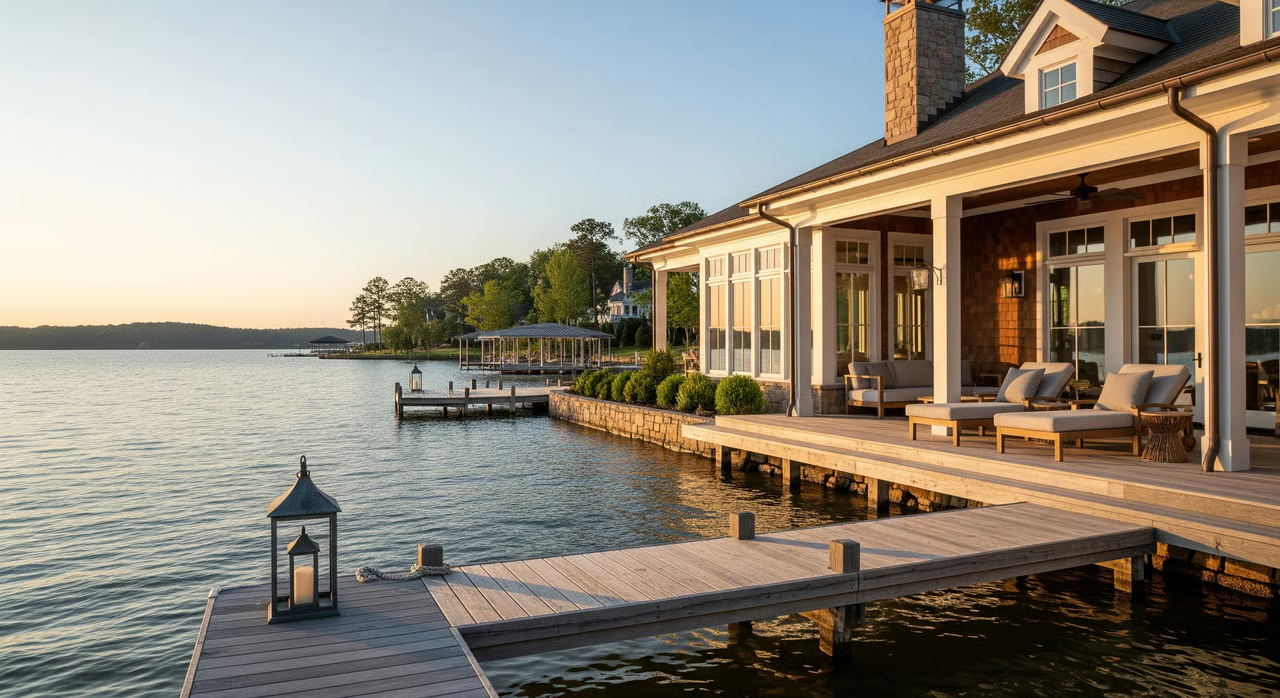
Direct lakefront ownership is often the best fit for buyers who want the water to be part of everyday life. Depending on the property, it may include shoreline frontage, open water views, a private dock, space for entertaining, and immediate access for boating, paddleboarding, fishing, or swimming. For frequent lake users, the ability to walk outside and get on the water can be a meaningful advantage.
That convenience also comes with responsibilities. Waterfront lots may require more attention to tree health, drainage, slopes, retaining walls, erosion, private roads, dock structures, and outdoor surfaces. Insurance costs can differ from those for inland homes, and a lender or insurer may require extra review based on the site. Before assuming that a dock can be changed or expanded, buyers should review the applicable rules and permit history. Duke Energy’s permits for shoreline activities are a useful starting point for understanding why shoreline work, docks, and related structures should be verified before closing.
Lake-Access and Waterview Homes: A Middle Ground
Lake-access homes can be a practical option for buyers who want to enjoy Lake Norman without taking on direct shoreline ownership. A neighborhood may offer a shared boat ramp, a day dock, marina slips, a beach area, trails, or a waterfront gathering space. Some homes also have partial, seasonal, or long-range water views that add atmosphere without carrying the same level of waterfront maintenance.
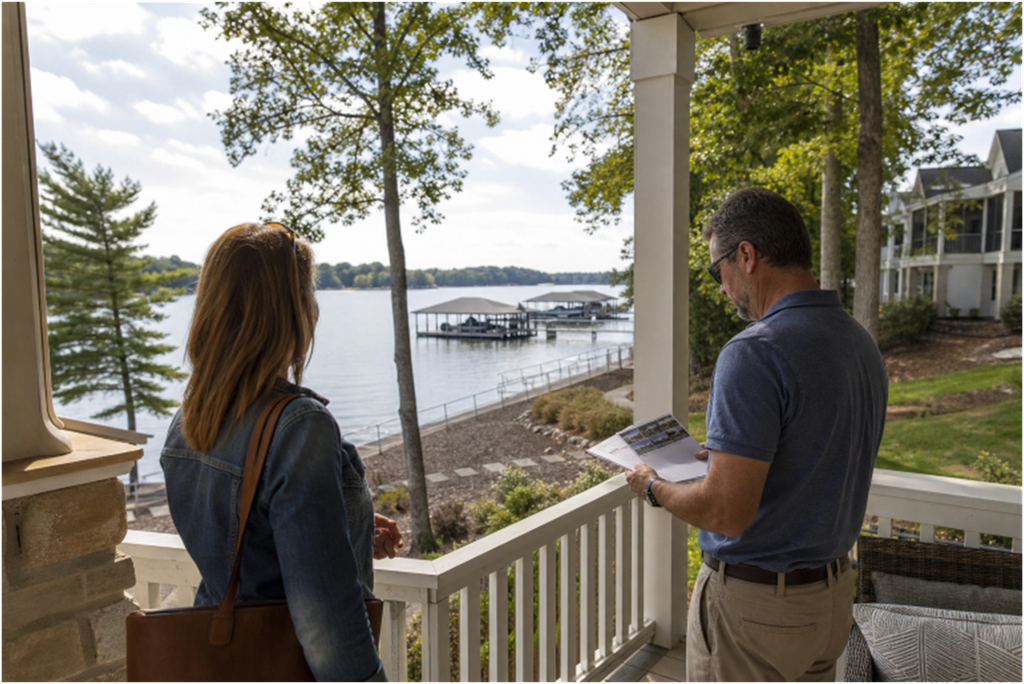
However, “lake access” can mean many different things. One community may provide a private ramp for residents, and another may only have a nearby public access point. A waterview may be protected, seasonal, or likely to change as trees grow or nearby land develops. Public overlooks and community waterfront amenities are not the same as private water rights, so buyers should read the HOA documents and survey rather than relying only on listing language.
Questions for Lake-Access Communities
- Where is the access point, and how far is it from the home?
- Is access private, shared with residents, or open to the public?
- What HOA fees, transfer charges, and maintenance obligations apply?
- Is boat or trailer storage available, and are there size restrictions?
- Can the intended boat use the access point safely at typical water levels?
- Are there seasonal rules, guest limits, or restrictions on docks and slips?
Inland Homes: Space and Daily Convenience
Inland homes can offer strong value for buyers who prioritize larger yards, newer construction, broader floor-plan choices, and less specialized upkeep. These properties may also be closer to major roads, grocery stores, medical services, parks, restaurants, and schools. For households with busy schedules, saving time on routine drives may matter more than being close to the shoreline.
Still, the inland location should be evaluated carefully. A lower-priced home can lose its appeal if the route to work, school, or frequent errands is difficult during peak traffic. Drive the route on a weekday morning and afternoon, not just during a quiet weekend showing. Buyers should also check planned road connections, zoning, and nearby development activity using the Town of Mooresville’s mobility planning map.
Compare Costs Beyond the List Price
A useful comparison includes the complete cost of ownership, not just the asking price.
- Lakefront: Review homeowner’s insurance, potential flood coverage, dock and seawall maintenance, erosion control, tree work, landscaping, and shoreline repairs.
- Lake-access: Review HOA dues, amenity maintenance, boat storage costs, access restrictions, possible special assessments, and shared facility rules.
- Inland: Review commute expenses, lawn care, utility costs, road conditions, future development, and proximity to services.
Water use is another practical consideration. Larger yards and elaborate landscaping can require ongoing irrigation, and conservation measures during dry periods may affect watering schedules. Ask about the home’s irrigation system, water source, and landscaping needs before planning major outdoor changes.
Questions to Ask During a Showing
- What type of water access, if any, comes with the property?
- Are amenities private, shared, or public?
- What are the current HOA dues, rules, and pending assessments?
- Have there been drainage, flooding, erosion, or shoreline repair issues?
- Which improvements need HOA, town, or utility approval?
- How reliable are the internet, water, sewer, stormwater, and emergency services?
- What development, road, or zoning changes are planned nearby?
- How long do typical trips take to work, school, shopping, and recreation?
A Simple Decision Process for Buyers
- Set the lifestyle goal: Decide whether boating, views, privacy, yard space, or convenience matters most.
- Set a complete budget: Include insurance, HOA dues, maintenance, utilities, and likely repairs.
- Compare categories: Tour lakefront, lake-access, and inland homes before narrowing the search.
- Test the location: Drive key routes at different times and visit the area beyond the property line.
- Complete detailed due diligence: Review surveys, permits, inspections, insurance, community rules, and access rights.
Choose the Setting That Supports Your Life
Choose lakefront when private water access and views are central to how you want to live. Choose lake-access when recreation matters, but a lower entry cost or simpler upkeep is appealing. Choose inland when space, convenience, and predictable maintenance are higher priorities than shoreline access. The best Mooresville-area home is not always the one closest to the water. It is the one that aligns with your routine, budget, and long-term plans.
